From photo to marked script, in four honest steps.
No magic claimed. Here's exactly what happens to your work — and where the limits are.
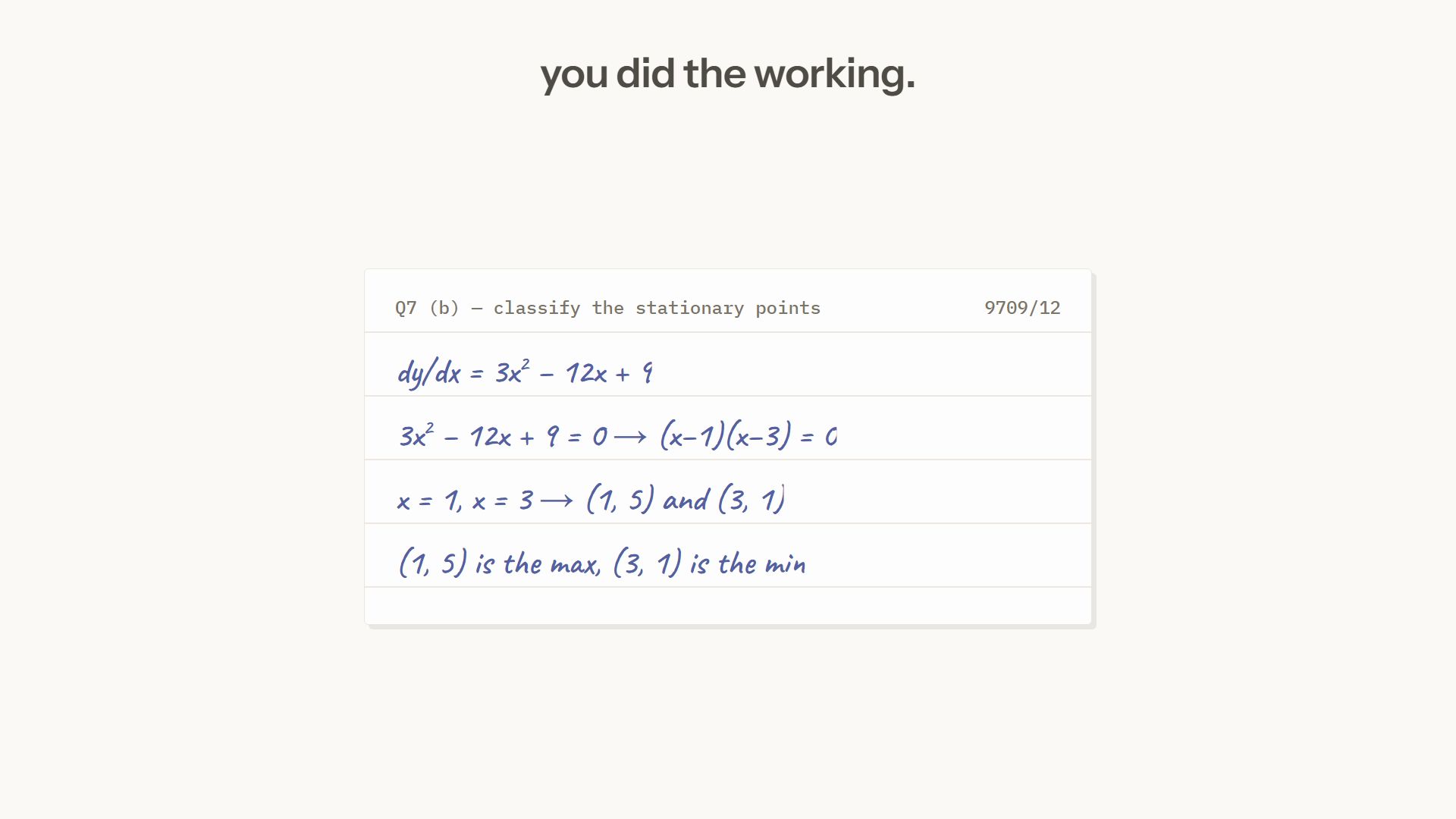
Step 1
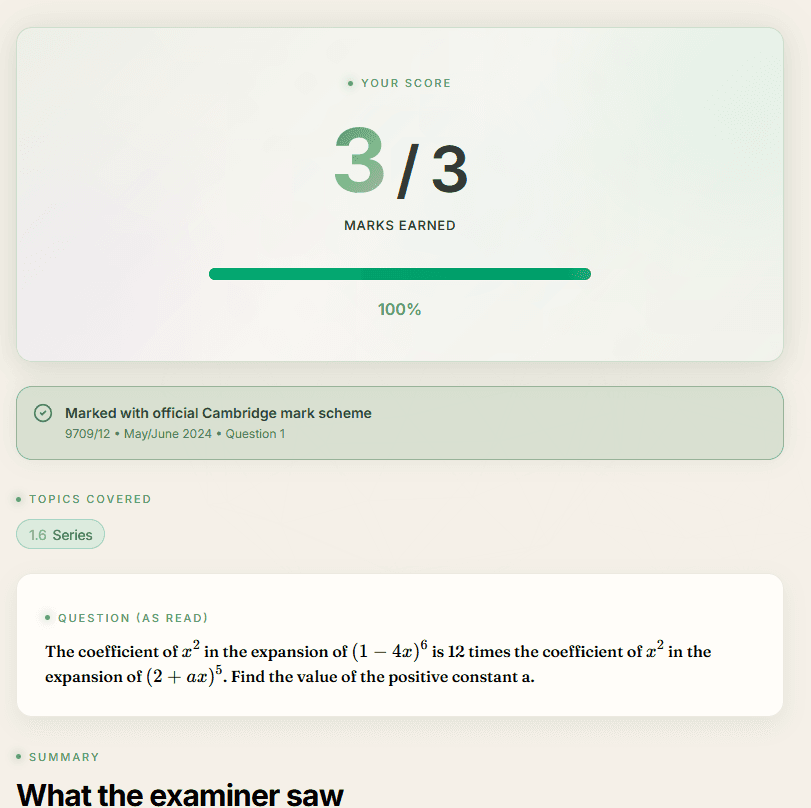
Your score, right there
Marks earned, the paper, and the question — checked against the official Cambridge scheme for that session.
Step 2
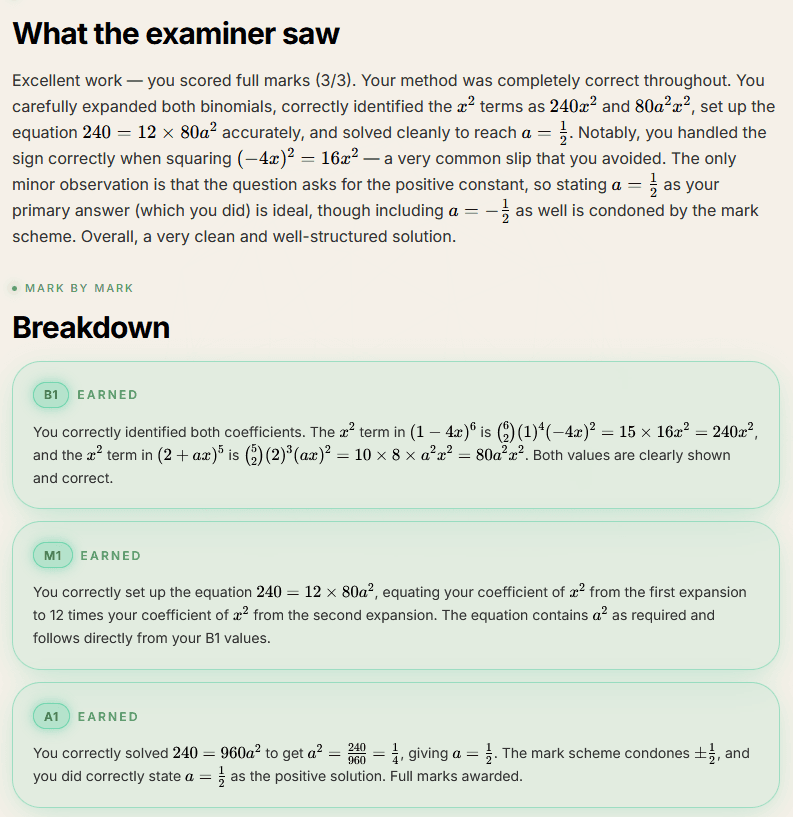
Every mark, accounted for
You'll see exactly where you nailed it and where you slipped — B1, M1, A1 explained like an examiner would write them.
Step 3
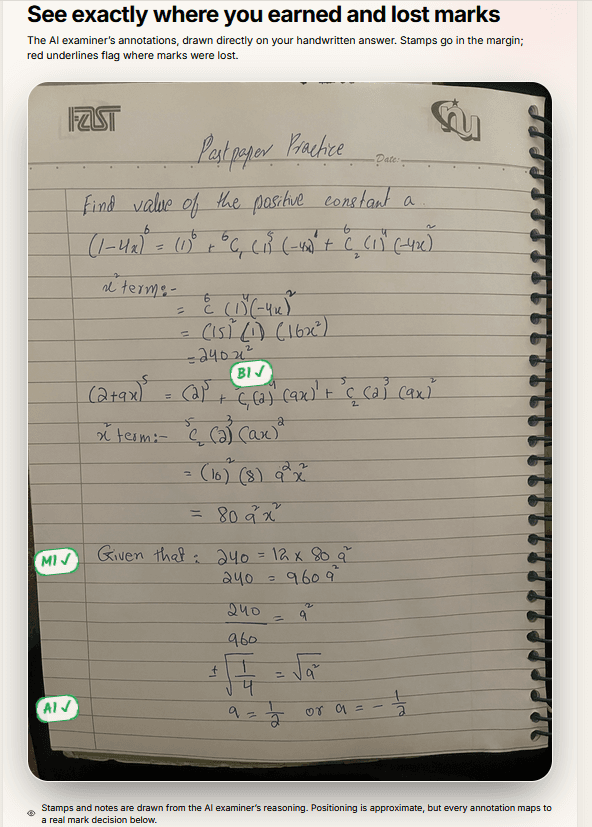
Ink on your paper
Stamps and notes sit on your typed or handwritten working — not a vague paragraph at the bottom of the page.
Step 4
Then learn and retry
Open a worked solution when you want the method, then mark another go at the same question or move on.
Trained on real Cambridge mark schemes. Returns red-pen annotations and structured feedback in under a minute. Five questions free, no card.
What you get
Three things the ink is for
Adaptive marking
MCQ keys, B1/M1/A1 step marks, and essay band descriptors — the engine detects the question type and marks it the way Cambridge does, not with a generic rubric.
Examiner's Ink
Red-pen-style notes anchored to your actual handwriting. See which line earned B1, where M1 was lost, or why your essay sits in a particular band — not a vague paragraph at the bottom.
Mastery tracking
Each attempt feeds your syllabus coverage map. Spot blindspots, track progress across spec points, and know what to revise next — built from your real marking history.
Honest about the AI
What it does well — and where it's limited
What it does well
Where it's limited
Try the desk
Put one question under the scheme
Free tier. About a minute. Not endorsed by Cambridge International.
Second-pass marking — how it works
MarkScheme is built for scheme-aligned feedback after you self-mark: photograph handwritten Cambridge or IB answers, get B1/M1/A1 or markband breakdowns in ~30 seconds, then redo one skill before the next paper.